For the majority of today's ITHE class we were completing an e-asttle test for algebra. I managed to get the exact same score as the last time I did this test at the end of April (8 questions wrong, but different questions), which was a bit surprising and sad as I had not improved. I realized that I managed to get more of the easier questions done this time and less of the harder ones but I still achieved 6A again anyway.
Our microbit contraption had flat batteries and a strip of the foil was broken so we fixed those issues but other than that it still worked.
Wednesday, 27 June 2018

Monday, 25 June 2018
25/6/18
Today Spike and I have finally finished our Microbit project; a combination lock for a cardboard box. It is a bit scrappy and the ease of access is not too good for a user, but when set up properly it does exactly as programmed. The problem with it the past week and a half was the lack of a working buzzer; one of the buzzers from the new shipment fixed these ailments.
I found it challenging to get the foil on the inside of the front side and the outside of the lip of the lid, but using a technique I managed to secure an unbreaking connection by making the both of the lines of foil jagged so it had more chance to touch the other. An unintended effect of this solution is that whenever the environment around the box is manipulated, it has a high chance of triggering the breaking of the connection, so it will go off if someone is trying to tamper with the table that it's on.
I have learnt a lot from the code, particularly how ciphers worked and the formula to make a number combination equal to the key to open a lock, as shown below. I understand all of this code and it makes sense to me.
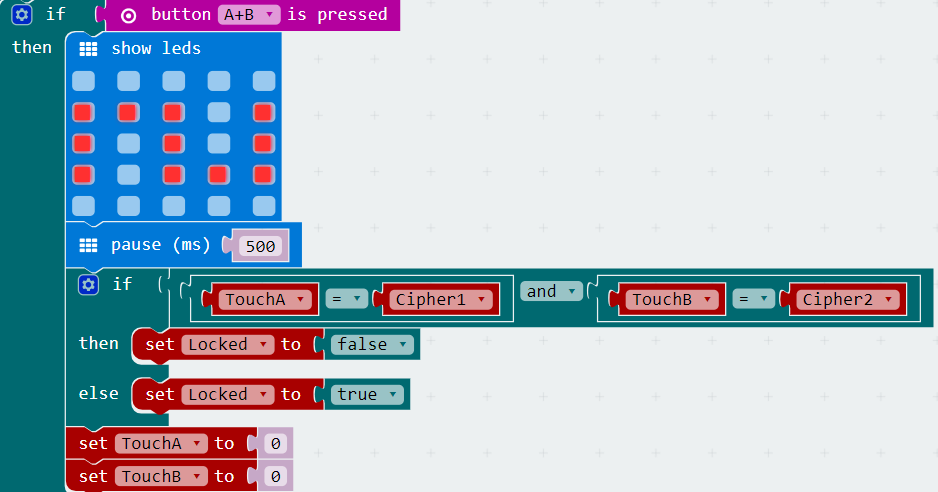
I found it challenging to get the foil on the inside of the front side and the outside of the lip of the lid, but using a technique I managed to secure an unbreaking connection by making the both of the lines of foil jagged so it had more chance to touch the other. An unintended effect of this solution is that whenever the environment around the box is manipulated, it has a high chance of triggering the breaking of the connection, so it will go off if someone is trying to tamper with the table that it's on.
I have learnt a lot from the code, particularly how ciphers worked and the formula to make a number combination equal to the key to open a lock, as shown below. I understand all of this code and it makes sense to me.
Monday, 18 June 2018
18/6/18 Log
Today we have learnt about the usage of misleading or poorly made graphs. We completed a class activity, which was critiquing a slideshow of incompetent graphs. The second activity was more challenging, as it was to 'write down what the following graphs are telling you'. I managed to complete it as well as find a few misleading points of the graph. Next week I hope to finish our micro-bit project by getting our buzzer to sound as the circuit breaks on our combination lock box.
Wednesday, 13 June 2018
13/6/18 Log
Today Spike and I continued progress on making our Micro-bit contraption; a combination lock for a box. We had made some progress on Monday already, but we have made much more progress today. We managed to finish almost all of our project, but still have yet to make the buzzer sound when the circuit on our lock is broken. Next week, we plan to fully complete this project. What we found hard today was how to check if the code worked, as we had to read through the code thoroughly to find out how it exactly worked.
Subscribe to:
Posts (Atom)